Green Day 06 May 2005: CSU Convocation Center, Cleveland, Ohio
When Dookie broke, there were rumblings from Green Day’s northern California punk brethren that they had sold out and had become corporate, mainstream whores. Green Day denied it, and I think they were justified in that denial at the time. But I have to wonder what their contemporaries would think if they attended one of the stops on Green Day’s American Idiot tour.
Admittedly, I wrote off Dookie as, well… dookie. But I eventually picked up their greatest hits collection and then got the brilliant American Idiot when it was released. And the more I listened, the more I was convinced that Green Day were the latter-day Clash. In 2004, Green Day mattered, at a time when very few artists did. And they knew their history: The album is rife with overt references to the likes of the Who, Bowie, and Mott the Hoople. Much like the Clash, they're not afraid to trot out their album collection and put their influences out there, as well as their politics.
Taking its activist and socially conscience tone from “Minority,” a single off their immediately previous album, American Idiot is a fierce indictment against the second Bush administration, the war in Iraq, and the neo-cons of the Religious Right. It contains bold statements of conviction. Lines of songs – like “Maybe I am the faggot America / I’m not a part of a redneck agenda” from the title track, and “Pulverize the Eiffel towers / Who criticize your government” from “Holiday” – drip with contempt and irony that amount to landing a kick somewhere slightly south of the Bible Belt. And the political Left doesn’t make it out of the fray unscathed either, as the band takes a swipe at the John Kerry’s of the world (remember him?) with the “Holiday” line: “Hear the drum pounding out of time / Another protester has crossed the line / To find the money’s on the other side.”
I have been to my fair share of punk shows and seen footage of the Clash live, but nothing prepared me for what I saw one night in May 2005. When I got my tickets for the American Idiot tour stop at the Wolstein Center on the edge of the Cleveland State University campus, I had visions of attending a punk show. I did not get what I expected. What I got was Def Leppard pyrotechnics and a Britney Spears audience. The show opened with five of the first six songs off of American Idiot… but they were peppered with “1-2, 1-2-3-4’s” and “Hey-O” call and responses. As if channeling all the 70’s arena rockers who influenced them, Green Day offered numerous call-outs to Cleveland and lyric changes to incorporate the hometown. Flashpots lit up the stage, synchronized with songs and illuminating the arena. The satiric pinnacle was the cover of Queen’s “We are the Champions” during the encore, complete with lyrics flashing on the giant curtain of lights so the kids too young to know them could sing along. It was clichéd and schmaltzy. And it would have worked beautifully for me on an ironic level, if not for being surrounded by girls less than half my age screaming and crying in N*Sync-like joy at attending their first concert – with their mom’s and dad’s in tow – turning the evening’s proceedings into a wholly surreal affair.
While I was surprised by how much I enjoyed hearing the older material live, I would have preferred Green Day to play the American Idiot album in its entirety – straight through, in order, and uninterrupted. There is a ferociousness to the American Idiot material – a combination of urgency and (what seemed like at the time) timelessness that is still compelling. In spite of the arena rock trappings, the conviction found on the album arrived in tact when translated to the live show, and was surprisingly coupled with an earnestness in its delivery. And while I think the message came across very well to the crowd, I almost wanted more political statements throughout the show to ensure the kids understand just how important it is, that it’s worth giving a damn about, and that they have the power to influence it. I appreciated frontman Billie Joe Armstrong’s political comments that peppered the show and that he closed the show urging everyone in the venue to get out and make a difference. But, if you’re going to neuter your stage presence to the point where a punk show is a semi-political family-friendly event – you might as well pour it on a little thicker.
I remember this being one of the first shows where it struck me just how much concert going has changed. Before the Information Age, you had no idea what to expect when you attended a concert. Things like what the band would perform, stage setups, etc. were all a part of the great unknown. Now, with the interweb, if you choose to look you can find the set list, the stage setup, the pre-show music, reviews, and even how often the songs have been performed on that particular tour.
Going into the evening, I knew all about the big pink bunny, “YMCA”, the theme from 2001, the set list and order, the making a band bit during “Knowledge”, the “King for a Day/Shout” routine, that “Minority” would be the last song of the main set, and that a solo version of “Good Riddance (Time of Your Life)” by Armstrong would close the encore.
I’m torn on this spoiler knowledge. Part of me misses the sense of unknown and anticipation that going to a show used to generate. There was a sense of “this show is just for me” and, by virtue of not knowing what was done or played at other shows, a sense that what we were seeing was truly a unique experience. Does all this knowledge at our fingertips detract from the overall feel of the show? Maybe, but despite all that knowledge going in, by virtue of their charisma and apparent genuine appreciativeness of performing, I still felt the Green Day show I saw that Friday night in Cleveland was unique and personal and worth both my time and money.
So, is Green Day still a punk band? Are they worthy of Clash comparisons? On disc, the answer is a fairly decisive “yes.” Based on the incarnation of their live show I witnessed six years ago, the answer is a bit more of a shoulder shrug and a half-hearted “sure.”
Michael Cavanaugh in Concert: The Music of Billy Joel and More!, with the Akron Symphony Orchestra (Conducted by Christopher Wilkins) 12 February 2011: EJ Thomas Hall, Akron, Ohio
I almost saw Billy Joel in concert once. It was August 1994 and Central Florida was being brutalized by a nasty storm. My buddy John was working, so his then-girlfriend (someday-to-be wife) Jenn and I decided to head over to the Citrus Bowl and see about picking up some scalped tickets for the Billy Joel/Elton John show that night. We circled the stadium in my 1983 Honda Civic for what seemed like hours in sheets of rain. People showing up for this open air show already looked miserable and drowned. I don’t know that Jenn and I ever even ended up getting out of the car that night. We – wisely, I think – abandoned our quest.
I’m not a huge Billy Joel or Elton John fan, but I like both of these artists and still wouldn’t mind seeing either of them live at some point. Born in 1970 and raised a child of the ’80s, there is something familiar and comforting about their music.
I had never heard of Michael Cavanaugh prior to Tracy weaving her contest winning magic. Courtesy of 91.3 The Summit, she came up with a pair of tickets to see Cavanaugh at EJ Thomas Hall, and after some cursory digging about the show, we figured it sounded like a potentially good time.
We discovered Cavanaugh was handpicked by Joel to star in the Broadway production of Movin’ Out and has since continued to cash in on that ticket. I would never begrudge him that, but Tracy and I both came away from the show Saturday night a little disappointed in Cavanaugh probably because of the expectations that path to stardom and endorsement entail.
Cavanaugh is from Northeast Ohio, which is cool. My civic pride swells a bit more every time local people do well. But the link goes deeper than that. Cavanaugh’s first full time musician gig was at the Blazing Pianos bar in Orlando. If I’m reading his biography right, he worked there during the same time I was living there. That means there’s a pretty good chance I saw him perform once or twice back in the day, having spent a few nights in my twenties at the various piano bars around Orlando with friends.
Regardless of any cool connections, it’s hard to get past the execution of Cavanaugh’s symphony orchestra collaboration. It’s a case of the performer being crushed under the expectations set by the hype. Tracy and I anticipated more from Cavanaugh’s voice and stage presence based on what we’d read about him. I thought his saxophone player John Scarpulla had more charisma, and it was impossible not to watch his drummer (another Northeast Ohio native, and who played the drummer in Almost Famous) Johnny Fedevich play.
The selections were interesting, in that many times the band only seemed to play parts of songs and often resorted to medleys of Joel songs. The best Joel song of the night was, by far, “Goodnight Saigon”. Cavanaugh’s cover of Elton John’s cover of The Who’s “Pinball Wizard” was also interesting. When he covered Jerry Lee Lewis’ “Great Balls of Fire” and Chuck Berry’s “Johnny B. Goode”, Tracy and I both went into full ’80s pop culture overload and could only think of Dennis Quaid, Top Gun, and Back to the Future. Sad, I know.
The two orchestra only pieces from Joel’s 2001 classical album, Fantasies & Delusions – “Opus 2. Waltz #1 (‘Nunley’s Carosel’)” and “Opus 10. Air (‘Dublinesque’)” – were excellent. As was their work during the cover of Joel’s “Pressure”. As a bonus, it was cool to see our son’s drum instructor – second chair percussion with the orchestra – do his thing.
The night struck me as striving to fall somewhere between the artist/orchestra collaboration of Pink Martini and the Cleveland Orchestra we saw a year ago, and the Beatles cover band perfection of RAIN last month. But Cavanaugh never quite succeeded on either front. The Akron Symphony Orchestra deserves a lot of credit for their efforts, but Cavanaugh’s song selection didn’t lend itself well to interpretation. And Cavanaugh wasn’t a close enough approximation of Joel or Elton or any of the others he covered (vocally or from a stage presence perspective) to put him anywhere near the caliber of RAIN.
Regardless, though, I had a nice night out with my wife. And I almost saw Billy Joel in concert once.
RAIN – A Tribute to the Beatles 23 January 2011: EJ Thomas Hall, Akron, Ohio
Honestly, when we purchased our season subscription to Broadway in Akron, none of us were entirely sure what RAIN was, other than something involving the Beatles. Although, in reality, it’s nothing more than a tribute band show, that’s selling it a bit short.
I find it fascinating that the Broadway reviews of RAIN all seem to talk about it being another way for aging baby boomers to relive the glory days of the Beatles and their catalog. While the show at EJ Thomas Hall was primarily boomers, there was a healthy 19-and-under contingent in attendance – including my kiddo. Tracy has been under the weather, so I took Jack with me. He’s been to concerts before (The Black Keys, Bob Dylan, Jake Shimabukuro), he’s been to theater productions before, and he digs the Beatles, but this was a funky little mix of all those things.
Beginning with their arrival on American soil for the historic Ed Sullivan Show appearance and using the musicians’ costume changes as signposts, the show moves in rough chronological order through the Beatles career. And, as proven repeatedly throughout the years, it’s difficult to find a Beatles tune that isn’t instantly recognizable, so nearly every song was a sing-along affair.
In the same way it’s difficult to comprehend how The Greatest Generation literally saved the world, I struggle to wrap my head around just how seismic the musical paradigm shift was when the Beatles arrived. In context of the times, it’s amazing to think about these teenagers’ minds being completely blown by an aesthetic and sound that had never been seen or heard previously, and what that experience must have been like. I don’t know that there will ever be another popular cultural revolution like it. You could argue things like the rise of personal computers or the internet, but those weren’t specific moments in time to our collective conscience. We can accurately point to the Beatles’ first appearance on Ed Sullivan as the exact instant at which music changed.
The timelessness of the Beatles catalog is as impressive as its near-universal familiarity. The entire hall was rocking throughout, singing along, clapping, people standing up and dancing. While perhaps not as fervent as a true Beatles show back in the day, the night crackled with energy.
The sparse sets were unobtrusive, with the focus primarily on the musicians and music, and the three projection screens to enhance the experience. From the Ed Sullivan period, the performers took the audience through the Shea Stadium concert, the Sgt. Pepper era, the Abbey Road and rooftop concert years, and more.
The Fab Four of RAIN did a great job approximating their respective Beatles. Our seats were just far enough away to help maintain the illusion that they just might have been the real Beatles up on the stage. Along with our John, Paul, George, and Ringo, there is also a fifth on stage each night on keyboards to supplement the show. In the RAIN franchise there are three to four different John, Paul, George, and Ringos who tour or perform on Broadway, along with a pair of keyboardists. In a nice hometown touch, our “Paul” was a Northeast Ohio native, Robert “Mac” Ruffing.
With half of the original group now gone and already multiple generations past the group’s working period, it’s easier to make the argument for this tribute band than for something like a KISS or Aerosmith tribute band because there is simply no other way to hear Beatles music live. And while I’m sure it’s possible, you’d have to work pretty hard to come up with a crappy setlist. (Although the kiddo desperately wanted RAIN to play “Yellow Submarine” – they didn’t. But I think the “When I’m 64” sing-along helped smooth things over for him.) I guess you’re pretty much guaranteed a standing ovation if you’re doing it right, and that’s just what the cast of RAIN got when they came through Akron.
David Lee Roth 29 September 1986: Richfield Coliseum, Richfield, Ohio
The first concert concert I attended was David Lee Roth at the Richfield Coliseum. I went to the show with Courtney. She was a few years older than me and had just moved to the school district. My dad was in the local Lions Club chapter and I believe Courtney’s dad joined when they moved to our area. I seem to recall meeting her at one of our dads’ Lions Club family functions.
My musical tastes and my parents’ rarely cross, but especially then. My older sister Karen was into popular music – I remember her going to Rick Springfield and Jack Wagner and Corey Hart concerts in high school, all pretty tame. I am, however, grateful for the music Karen exposed me to and my subsequent appreciation for early ’80s pop music. From there, though, I moved on to a cocktail of hard rock and classic rock, a fairly natural progression for mid-’80s Midwestern adolescent. Rush, Boston, Aerosmith, Def Leppard, The Doors, Mötley Crüe, Led Zeppelin, and, of course, Van Halen.
I was a huge Van Halen fan in middle school and early high school. While I was ok with the Van Hagar incarnation (and saw them a couple of years later headline the Monsters of Rock Tour), it was the original lineup that always made me giddy. And, although Diamond Dave’s output took a nosedive after Eat ‘Em and Smile, that first solo album was a lot of fun.
With the Eat ‘Em and Smile concert just days before my sixteenth birthday and that I was going with someone older my parents seemed to trust, they relented and let me go. I don’t remember too much about the concert, to be honest. I vaguely remember the glam (now seemingly camp) metal group Cinderella opening for Roth. They had a few songs with videos that were in fairly heavy rotation on MTV that were up my alley at the time.
The now-long gone Richfield Coliseum was a cinderblock affair set in the middle of nowhere, about 20 miles south of Cleveland, and the only venue in Northeast Ohio outside of the Blossom Music Center amphitheater nearby in Cuyahoga Falls. These venues would be the site of the bulk of my mainstream concert-going activities until discovering modern rock/college radio acts in the late ’80s and the smaller downtown Cleveland stages they hung about.
Courtney got our tickets. Our seats were probably about two-thirds of the way down the floor, on an aisle, next to the front corner of the mixing board. The metal folding chair may or may not have been red cushioned, but even 25 years later I can recall that feeling of heady excitement standing on the deathtrap, straining for the best possible view of Diamond Dave while doing my best to not lose my balance and be eaten by the chair Snoopy style à la A Charlie Brown Thanksgiving.
Much like Cinderella’s set, I couldn’t tell you specifics about what Roth and his band played that night. I don’t remember any of Steve Vai’s solos or Billy Sheehan’s playing. What I do remember was being struck by the somehow intimate experience of sharing the night with 20,000 strangers. And that communal feeling extended beyond the night of the show. I remember buying my first concert t-shirt and wearing it to school the next day. I was suddenly in a club – exclusive to those that had been to a rock show, a concert at the Coliseum. I had credibility of sorts. It was a very cool feeling.
I lost track of Courtney quickly after she graduated, but I will always be grateful for her role in finally getting me to my first rock show.
I may not be a huge David Lee Roth fan these days, but that first experience of witnessing music I love live – the raw power, the transcending energy, the sense of community – was transformative. For a kid to whom music was so important to anyway, the live experience forever altered how I both perceive and listen to music.
My blog post on The Cure’s Disintegrationhas prompted some great feedback via comments, Twitter, and email. One of those personal emails was from my good friend and musical confidant Jeff. I’m of the mind that if he had intended for the contents of the email to be shared with a wider audience, he would have sent it as a comment on the blog, but there are some sentiments in his email that I think are worth exploring a bit and using as a jumping off point.
Jeff agreed with my observations on the importance of specific albums being tied to the fervor of one’s fandom at the time of its release, as well as the ties between songs and memories. But to me, his most interesting observation was that “all of the really memorable and important albums [in his life] are from high school and college.”
This is an idea I have always maintained. I wear my sentimentality on my sleeve, and I have no problem looking backwards in order to understand my present. There is something to be said about that period in your life – college in particular, that carries immense weight in shaping who we become as adults.
Jeff and John and I all went to college together, and they, along with Jen and Erin, were my closest friends that freshman year at Bowling Green. John and I have talked at length about the importance of the first year of college. Never before or after in one’s life do we find ourselves away from home for the first time, thrown into a hyper-real mini-society that combines all the cliquishness of high school with the quasi-responsibility of young adulthood. Everything is dramatic. Every decision is the Most. Important. Decision. Ever.
Because of this, at least among my friends it seems, the music of that era is imparted with more significance than music from any other time in our lives. Meeting and dating my wife, getting married. All arguably more significant periods in my life, and music accompanied them all, but not in the way it did when I was 18 and 19 years-old. I have mentioned before how U2’s All That You Can’t Leave Behind is the only album I can think of that entered my adult consciousness with anywhere near the importance of the music from my youth.
Last year, I wrote about that significance this way in a blog post about Nine Inch Nails’ Pretty Hate Machine: “The closest any other album has ever come to being as fundamentally meaningful to a period in my life is U2’s All That You Can’t Leave Behind. Released just after my 30th birthday at the end of 2000, this collection of songs became the soundtrack to our return to Ohio after ten years away, our trip to Paris, the birth of our son, our friendship with Jeff and Anna, our post-9/11 trip to New York City in December 2001, and on and on. But it was different, in that this was a collective soundtrack for experiences Tracy and I shared. And if you’re lucky, your thirties inhabit a very different worldview from that of your 19-year-old self.”
From a practical perspective, I don’t think we consume music in the same way we once did. Listening to Disintegration over and over as I was writing about the album, I recognized that as each song was ending I knew instinctively the next song’s opening notes. I anticipated them, and took comfort in that familiarity. I think that comes from being a product of the last generation to listen to music on LPs and cassette tapes. There was no “shuffle” or downloaded singles. It wasn’t until compact discs that we had a random play option outside of mix tapes (which, of course, are set playlists anyway). And now with digital downloads we live in a singles driven, “album optional” world.
While the way music is consumed affects what is listened to (i.e., our downloadable world lends itself to singles versus whole albums), that doesn’t diminish the importance of the music to today’s youth. I’m sure they are hit just as hard by “their” music today as we were at the same age by “our” music.
Sarah McLachlan 15 December 1997: UCF Arena, Orlando, Florida
The other week, there was a parking and traffic mess in trying to get the kiddo to and from his drum lessons on the campus of the University of Akron because there was an event across the street at EJ Thomas Hall that night. On the way off campus, I finally saw the marquee and realized Sarah McLachlan was performing that night, which immediately transported me back 13 years to a concert Tracy and I attended at the University of Central Florida.
We went through a stretch there in the late ’90s where Tracy was winning every flipping contest she entered! Didn’t matter if it was a radio call-in, or at our local CD store, or drawings, or whatever. If Tracy threw her name in the hat, it inevitable was the one selected. We had dinner and VIP tickets to see Duncan Sheik and Lisa Loeb at the Atlantic Dance Club at Disney’s Boardwalk; we saw the Wallflowers at the Hard Rock Café; we attended New Year’s Eve at Disney’s Pleasure Island with Joan Jett and Men at Work that included a night’s stay at the Contemporary resort and limo service to and from Pleasure Island. It was crazy how she scored over and over with these contests.
The particular contest tied to Sarah McLachlan was through Disc Go Round. I don’t know if they are still around, but they were a sort of used CD store franchise. “Ours” was on SR 50 in Colonial Plaza across from TooJay’s, one of our favorite eateries back in the day (and around the corner from Beefy King!). Tracy and I lived nearby in the Conway and Lake Underhill area of Orlando at the time. Because we had both worked at CD stores back in the day and have always been lovers of music, we would go to the store often and got to know the owner.
The cool thing about Disc Go Round (and, as I recall, CD Warehouse had a similar model but with less friendly staff) was that they were the first used CD store I had been to with listening stations. But unlike full booth style ones you used to have in old vinyl record stores, these were just multi-disc players set up on a kitchen bar type counter with barstools and headphones for each station. You could take the empty CD case to the staff and they would pull the corresponding disc and queue it up for you on the player. Tracy and I could waste all kinds of time there!
Tracy had entered the contest at the store because we wanted to see Barenaked Ladies. It’s rare for me to queue up the Barenaked Ladies anymore, but there was a time they were in heavy rotation. Tracy introduced me to their music, and we saw them perform numerous times around Orlando, including in the parking lot of the Hard Rock Café (they had a cool concert series at the time that was cheap and fun and took advantage of the weather). Tracy ended up winning the tickets, and we were treated to one of the most peculiar line-ups we’d ever come across. We joked it was an odd sort of Great White North bill, with Chicago’s Freddy Jones Band opening (who we had, admittedly, never heard of before that night), followed by Canada’s Barenaked Ladies, and headlined by their then-label mate and fellow countrywoman Sarah McLachlan. At the time, she was huge, touring behind the Surfacing album and riding high off the success of the inaugural Lilith Fair music festival she had organized earlier that summer.
Tracy had McLachlan’s Solace, Fumbling Towards Ecstasy, and Surfacing, but we were clearly going to see Barenaked Ladies! We wanted jokey, goofy, Kraft Cheese throwing fun! We were definitely in it for a good time. It was a cold December night in Central Florida, and the university is nowhere near where we lived. I remember finally getting to the venue after a long line of traffic snaked its way through campus and finding our seats. We weathered the Freddy Jones Band, then had a rollicking good time with Barenaked Ladies touring on Born On a Pirate Ship, and they were amazing.
Eventually, though, they finished their set and soon McLachlan took the stage and the entire tone of the night changed. Melancholy, wistful, longing, and lovely. Decidedly not what we had come for with the Barenaked Ladies set. Soon, some of the girls near us began shouting “We love you, Sarah!” It was, well, odd. Tracy and I hardly knew what to make of it initially, then we began to realize that we were surrounded almost entirely by college girls. Crunchy, granola college girls so overwhelmed with emotion they had tears running down their cheeks as they screamed in adoration.
We quickly figured out that “gay college girls” were a key demographic of McLachlan’s at the time. (Maybe still?) The combination of overwrought emotion and cries of love seemed to only grow as the show continued. Tracy and I ended up leaving the show early, maybe halfway through McLachlan’s set. We were just too unnaturally amused by this clearly odd mix of acts, the completely different tones of both their sets, and their core audiences. It was a strange, strange night.
I finally got the deluxe edition of The Cure's Disintegration. It was a long time coming – both for the long-delayed album to finally be released last year and for me to actually get around to picking it up. As much as I love The Cure’s music up to that album, they peaked with Disintegration. Then everything changed after that: The ’80s were over, high school had ended, I left Ohio.
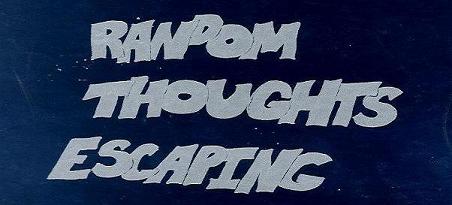
Originally released in May 1989, this was the sole Cure album to come out while I was deep (deep!) in my punk phase. And while I can and do love their other work like “A Few Hours After This…” and Pornography and “The Caterpillar” and Head on the Door and (especially) Faith, there is something to be said for the album that is released when you are actively a fan of a group that makes it that much more personal. Similarly, for example, Nine Inch Nails will never be as good as they were with Pretty Hate Machine, or Depeche Mode with Violator, to my ears. Disintegration was the soundtrack to the end of my senior year of high school and that turbulent summer immediately after. My girlfriend at the time, the one who pushed me to explore my creative side and expand my musical tastes and really helped set me on the path to becoming the person I ultimately grew into, left me and moved to San Francisco to be with her ex-boyfriend (I never said the relationship was healthy), and I was left alone to process the emotional void. The album was both the background against and inspiration for the bulk of my first real attempts at creative writing and poetry. That summer, I would go to the lone punk bar in Akron with my friends Jen and Nancy and others. We’d close the place down at 2am, then head over to the Country Kitchen on Arlington Road for sustenance. I’d come rolling into my parents’ house usually sometime after 3, put Disintegration on my stereo in the family room, and write until I couldn’t keep my eyes open any more. I wrote on unruled goldenrod yellow sheets of 8 ½ by 11 paper that came from I don’t know where. My weapon of choice was a fine tipped Sharpie. I had a manila folder that I had scrawled “Random Thoughts Escaping” across the cover (the masthead of this blog is a scan of that original folder turned into a negative). My first angst-y poetry collection. I wrote about all the things that were going on in my life, but primarily about the loss of love filtered through the dark and droning aesthetic of Disintegration. Opening with the simultaneously crashing and swirling “Plainsong”, every last song on Disintegration is a masterpiece, epic in scope and often in length. From “Pictures of You” to “Last Dance” to “Prayers for Rain” to the thematically anachronistic “Lovesong” to “The Same Deep Water as You”, there isn’t a single song among the twelve that I wouldn’t consider brilliant, but “Closedown” and “Untitled” have always stood out for me.
The liner notes on the original album say “THIS MUSIC HAS BEEN MIXED TO BE PLAYED LOUD SO TURN IT UP,” and the opening tribal drums of “Closedown” are relentless. You feel them thrumming in your chest with urgency at any volume. The immediacy of those four minutes of music – one of the shortest songs on the album – is underscored with a mere 11 lines of lyrics compacted into 40 seconds of song, making every turn of phrase, every word matter. The lyrics are well within lead singer Robert Smith’s doom and gloom wheelhouse, but the music feels uncharacteristically hard. While Cure songs of the era are typically dense, “Closedown” actually seems to apply pressure, actively pushing the air out of the listener’s lungs, suffocating them. The final track is by far my favorite of the album. To my young man’s sensibilities, it seemed so brazen to not name the song at all and simply refer to it as “Untitled”. Four short verses. No chorus to speak of. “Untitled” never meanders but isn’t too terribly fond of rigid song structure either. The words Smith crafts matched the then-fresh emotional wreckage of my ended relationship. With the exception of Cowboy Junkies’ “Dreaming My Dreams With You”, no other song completely encapsulates that feeling of loss I was experiencing the summer before college when my girlfriend and muse left me. I leaned on this album, and “Untitled”, in particular, to fuel my fevered scribblings. My dad was a meat cutter for a local grocery store and worked horrible hours, either getting up at four in the morning or working the closing late shift. My parents and I were barely speaking at the time – they didn’t understand what I was going through, and I was an unyielding 18-year-old – but on those early morning days, we’d often pass on the stairs, both of us bleary-eyed as one was heading to bed and the other heading to work. The Cure didn’t come to Northeast Ohio behind Disintegration until just after I had moved on to Bowling Green for college, but I ended up being able to come home for the Prayer Tour stop at the Richfield Coliseum in late August. I had worked at a local record store in high school and the summer before college, continuing there on breaks from school. I attended the Cure show with Jen and Nancy (who drove across the state to pick me up), along with my record store boss Ron and part-time co-worker Randy, whose full-time job was box office manager of the Coliseum. Thanks to him, we had front row, center floor seats, but it would have been an amazing show even if I’d had to watch from the rafters. The only downside was that although The Cure had The Pixies and Love and Rockets – two bands I love – opening for them on their west coast swing, we ended up with Shelleyan Orphan. Although I was moving on from the muse in San Francisco, the powerful connection between this album and those events wreaked havoc in me that night. I remember tearing up during “Untitled”, thrilled that they were playing such a deep album cut so important to me. It was a crazy night, and I remember being deposited afterwards in my dorm room on the other side of the state somewhat more worse for the wear, to be honest. I never saw The Cure live again.
The Cure never released another album as good as Disintegration. Wish swung far too much in the opposite direction, and the schizophrenic Wild Mood Swings was aptly named. The lone bright spot was the single “Wrong Number” off Galore, which hinted at late ’90s relevance.
Ten years after Disintegration, in an attempt to link a new album to the glory days, Smith stated 2000’s Bloodflowers was the final part of a retrofitted trilogy that includes the band’s brilliant works of Pornography and Disintegration. Regardless of the manufactured trilogy concept, Bloodflowers was a return to form and hit me as I was turning 30 and returning to Ohio after a decade away. Succumbing to waves of nostalgia, I gave it a pass.
The Cure faded from relevance for good after that, both for me personally and, apparently, commercially with releases of The Cure and 4:13 Dream. I still love the old albums and listen to them regularly. I can reliably queue up a Cure playlist and enjoy the music for what it is, but Disintegration I can also appreciate as an aural marker for some of the messiest stumbles along my path to young adulthood. Without regret.
 When Dookie broke, there were rumblings from Green Day’s northern California punk brethren that they had sold out and had become corporate, mainstream whores. Green Day denied it, and I think they were justified in that denial at the time. But I have to wonder what their contemporaries would think if they attended one of the stops on Green Day’s American Idiot tour.





 Posts
Posts


